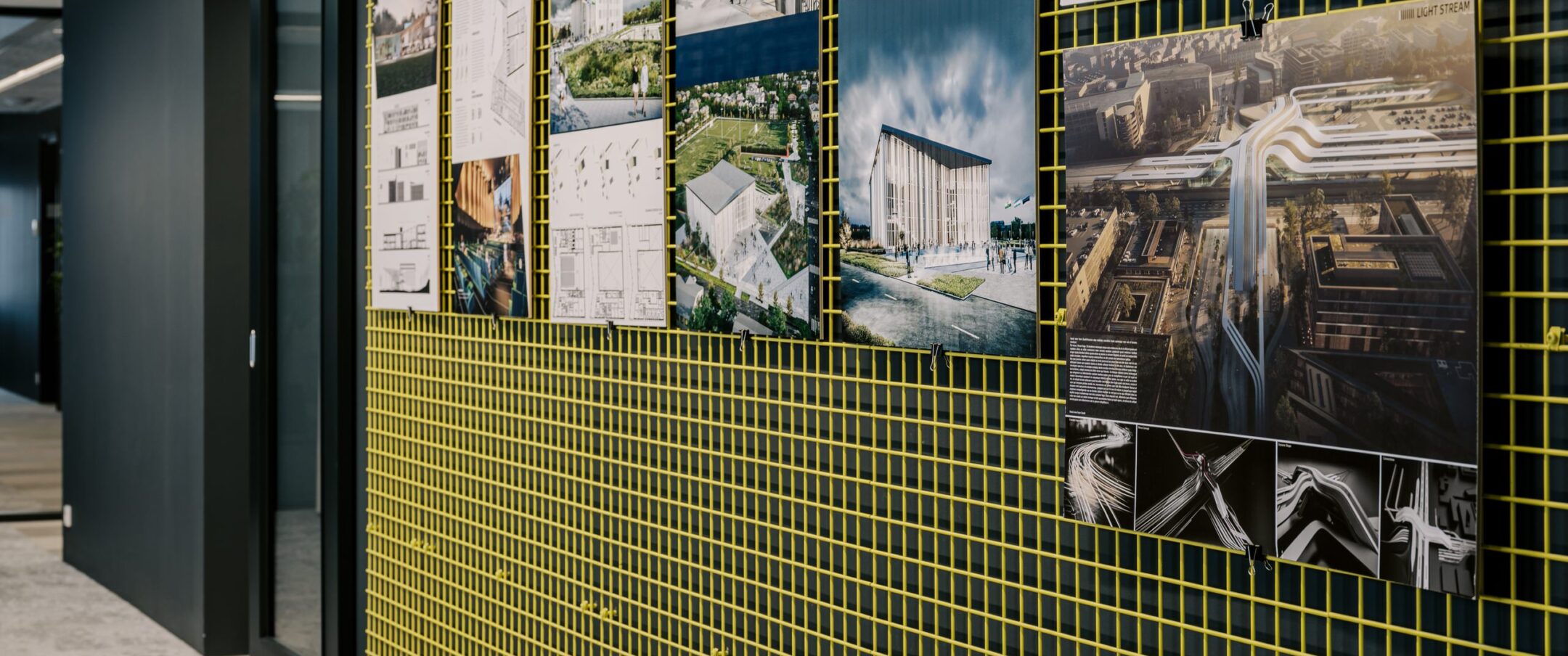
Lead design: one partner responsible for the whole design
Lead design is the overall management of a building design, in which one responsible party – the lead designer – coordinates the design of architecture, structures, building services and the other disciplines and is responsible for the design as a whole. The lead designer keeps the disciplines coordinated, ensures the design meets the requirements and is the client’s single point of contact throughout the design process. ESPLAN has acted as lead designer on most of its projects since 1989.
What a lead designer does
Book a consultation
Tell us about your project. We will clarify what you need and prepare an offer that matches its scope.
Book a consultationThe lead designer’s job is to hold the project together as a whole: the architectural concept must be buildable, the disciplines must be coordinated, and the client’s decisions and budget must be correctly reflected in the design.
- Brief and budget frame: We help the client define their needs, clarify the input data and agree on the project scope, schedule and budget frame.
- Coordination of disciplines: We manage the work of the architects, structural engineers, building services engineers and other discipline designers. Solutions are coordinated in one BIM model, so conflicts come to light already during design.
- Approvals and building permit: We deal with the authorities, utility companies and other parties and prepare the documents needed for the building permit.
- Quality and responsibility: At the end of every stage we check that the design meets the requirements, the client’s expectations and the agreed budget. As lead designer, we are responsible for the design as a whole.
- During construction: We provide designer’s supervision, answer the contractor’s questions and help resolve design-related issues that arise during construction.
Lead design is especially important for public buildings, hospitals, schools, office and retail buildings and refurbishment projects, where there are many disciplines and their coordination is critical.
Lead design is the overall management of a building design, where one responsible party coordinates the design of all disciplines and ensures the design is coordinated, buildable and compliant. The lead designer manages the design from the brief to the building permit and detailed design, and provides designer’s supervision during construction.
A lead designer is the client’s single point of contact and is responsible for the design as a whole. The main tasks are:
- agreeing the design brief, schedule and budget with the client;
- obtaining design conditions and utility companies’ technical conditions, and incorporating them in the design;
- coordinating architecture, structures, building services and other disciplines so that they are consistent;
- ensuring the design complies with legislation, building codes and local authority requirements;
- preparing the documents for the building permit application and dealing with the authorities;
- designer’s supervision during construction and compiling the design documentation required for the occupancy permit application.
The lead designer is responsible for ensuring that the building design is coordinated as a whole and meets the requirements. Discipline designers are responsible for the content of their own part, while the lead designer is responsible for how the parts fit together and for the integrity of the design.
No. ESPLAN designs the architecture, structures and building services in-house, and where needed we bring in partners, for example for fire safety or geotechnical design. As lead designer we also coordinate their work.
Yes. The architectural concept often comes from a competition or a firm chosen by the client. In that case we coordinate the disciplines, act as lead designer and deal with the authorities.
As early as possible, preferably before the concept design or at the latest at the start of preliminary design. The earlier the lead designer is involved, the more influence there is on cost, schedule and buildability.
Send us the building’s location, type and approximate size, the required design stage, and any existing design brief or sketch. You can request a proposal through our contact page or by e-mail at info@esplan.ee.
Why choose ESPLAN?
Experience since 1989
Designing since 1989. More than 1,600 completed projects means solutions proven on site and in use.Every discipline in one team
Architects, structural and building services engineers work as one team, so the disciplines are coordinated already during design.BIM and ISO quality
A coordinated BIM model, ISO 9001 and ISO 14001, and Level 8 engineers responsible for complex solutions.